China Top 10 Battery Energy Storage System Manufacturers
China has become a major force in the global Battery Energy Storage System market. Its manufacturers supply lithium iron phosphate batteries, power conversion systems, energy management software, and complete containerized solutions. These systems support solar farms, factories, data centers, and urban microgrids. Some projects operate beside vast photovoltaic fields. Others fit inside compact containers near busy industrial parks.
As IRENA Director-General Francesco La Camera has emphasized, “Energy storage is an essential component of the energy transition.” This perspective explains why China’s leading companies receive attention beyond domestic markets. Their competitiveness involves more than battery cell capacity. It also depends on thermal management, fire protection, cycle life, software integration, after-sales service, and international certifications. Small details matter. A poorly configured cooling system can reduce performance during hot summer afternoons.
This introduction presents China’s top Battery Energy Storage System manufacturers through practical industry criteria. It considers production scale, technology maturity, project experience, global deployment, and product reliability. Companies such as CATL, BYD, Sungrow, EVE Energy, and others have developed different strengths. Some focus on utility-scale storage. Others emphasize commercial systems or integrated solar-plus-storage platforms.
No ranking is flawless. Market data changes quickly, and public announcements do not always reveal long-term operating results. That limitation deserves attention. Real performance should be judged through verified projects, warranty terms, safety records, and field evidence. The following overview therefore avoids treating size as the only measure. It asks a harder question: which manufacturers can deliver dependable storage when the grid, weather, and customer expectations become unpredictable?
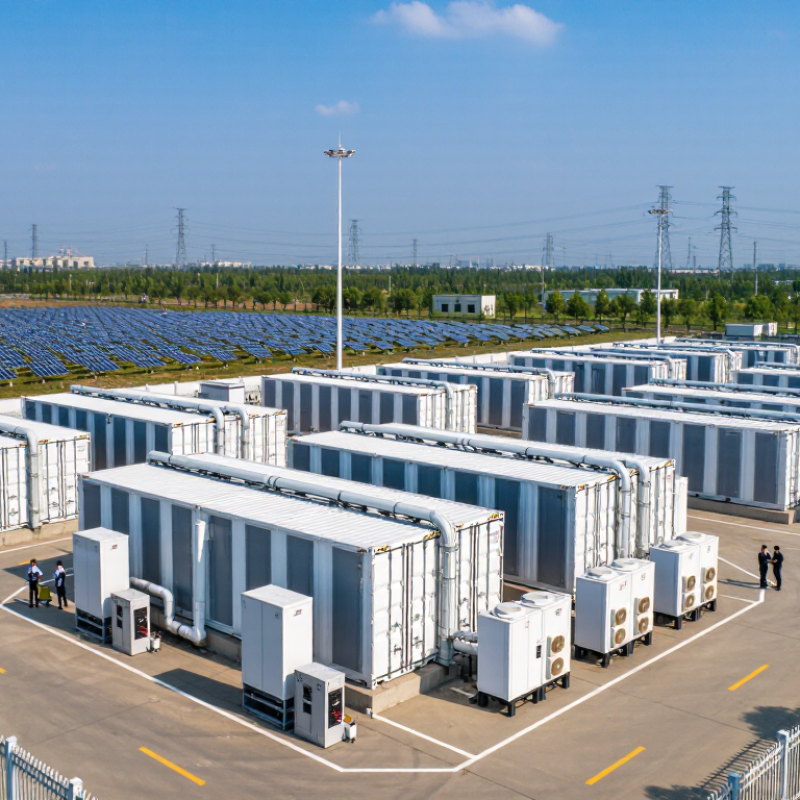
China’s Battery Energy Storage System Manufacturing Landscape
China’s battery energy storage system manufacturing landscape has moved from cell production toward complete, grid-ready solutions. Leading manufacturers now integrate cells, battery management systems, thermal controls, inverters, and software within one project framework. The top ten are not identical in capability. Some focus on utility-scale containers, while others serve factories, data centers, and remote microgrids. That range reflects China’s deep supply chain and fast engineering cycles.
In practice, a credible supplier must show more than impressive capacity figures. Buyers should examine cycle-life test conditions, operating temperature ranges, fire isolation design, and warranty exclusions. Factory audits can reveal details that brochures often omit, such as cable routing, enclosure seals, and spare-part access. Field experience matters. Technicians learn quickly from uneven sites, dusty substations, humid coastlines, and unstable auxiliary power. Still, performance claims deserve independent verification.
China’s manufacturers also compete through modular design and localized service teams. Containerized systems can shorten installation time, but they may complicate transport, lifting, and replacement planning. Software interoperability remains a practical weakness in some projects. A system may pass factory tests yet struggle with unfamiliar dispatch signals or poorly defined data interfaces. Procurement teams should request English documentation, cybersecurity controls, degradation models, and clear commissioning records. Small omissions become expensive later.
China Top 10 Battery Energy Storage System Manufacturers - China’s Battery Energy Storage System Manufacturing Landscape
Anonymous industry profile table based on commonly published Chinese BESS product specifications and market deployment practices
| No. | Representative Manufacturing Segment | Typical Battery Chemistry | Common System Configuration | Typical Rated Duration | Typical Round-Trip Efficiency | Typical Cycle-Life Range | Typical DC Voltage | Common Application | Key Manufacturing Capability |
| 1 | Utility-Scale Containerized BESS | Lithium iron phosphate | 20-foot outdoor container; approximately 2–6 MWh | 2–4 hours | 85–92% | 6,000–12,000 cycles | 1,000–1,500 V DC | Renewable-energy shifting and grid balancing | Container integration, thermal management, fire protection and energy-management software |
| 2 | High-Power Grid Support Systems | Lithium iron phosphate | Modular battery racks with high-power PCS units | 0.25–2 hours | 86–94% | 5,000–10,000 cycles | 750–1,500 V DC | Frequency regulation, voltage support and reserve power | Fast-response power conversion and high-availability controls |
| 3 | Renewable-Integrated Storage | Lithium iron phosphate | Solar or wind coupled BESS with DC or AC integration | 2–6 hours | 84–92% | 6,000–10,000 cycles | 1,000–1,500 V DC | Solar and wind power smoothing, curtailment reduction | Power forecasting, energy-management integration and coordinated dispatch |
| 4 | Commercial and Industrial BESS | Lithium iron phosphate | Outdoor cabinet or small modular container; approximately 100 kWh–5 MWh | 1–4 hours | 85–93% | 5,000–10,000 cycles | 500–1,500 V DC | Peak shaving, demand-charge management and backup power | Compact design, load management, remote monitoring and safety controls |
| 5 | Residential Energy Storage | Lithium iron phosphate | Wall-mounted or floor-standing modular battery; approximately 5–30 kWh | 2–6 hours | 88–95% | 4,000–8,000 cycles | 48–600 V DC | Self-consumption, backup power and rooftop solar integration | Modular battery management, household inverter compatibility and cloud connectivity |
| 6 | Microgrid and Remote-Area Systems | Lithium iron phosphate | Containerized or cabinet-based hybrid system with generator interface | 2–12 hours | 80–91% | 5,000–10,000 cycles | 500–1,500 V DC | Islanded power, rural electrification and critical facilities | Black-start capability, islanding control and multi-source coordination |
| 7 | EV Charging-Integrated Storage | Lithium iron phosphate | Battery cabinet or container paired with fast-charging equipment | 0.5–3 hours | 84–92% | 5,000–10,000 cycles | 750–1,500 V DC | Peak-load reduction and high-power electric-vehicle charging | High-power PCS, charging coordination and dynamic load control |
| 8 | Telecom and Critical-Load Backup | Lithium iron phosphate | Rack-mounted or cabinet-based DC battery system | 1–8 hours | 88–96% | 4,000–8,000 cycles | 48–800 V DC | Telecom networks, data rooms and emergency backup | High reliability, remote diagnostics and rapid battery replacement |
| 9 | Marine and Offshore Storage | Lithium iron phosphate | Marine-rated modular racks with dedicated cooling and protection | 1–6 hours | 82–92% | 4,000–8,000 cycles | 500–1,000 V DC | Electric vessels, offshore platforms and port electrification | Vibration resistance, corrosion protection and marine safety integration |
| 10 | Second-Life and Hybrid Storage | Reused lithium-ion cells | Screened battery modules assembled into cabinets or containers | 1–4 hours | 75–88% | 2,000–6,000 additional cycles | 500–1,500 V DC | Low-cost stationary storage and behind-the-meter applications | Cell grading, traceability, state-of-health evaluation and flexible control |
Note: Values are representative industry ranges rather than company-specific performance claims. Actual capacity, efficiency, cycle life, voltage and operating limits vary by cell design, system architecture, ambient conditions, operating profile and applicable certification requirements.
Key Criteria for Identifying the Top 10 BESS Manufacturers
China Top 10 Battery Energy Storage System Manufacturers
Identifying China’s top ten BESS manufacturers requires more than checking shipment rankings. Real project experience matters. Examine operating sites across hot, humid, and cold regions. Ask whether systems maintained stable performance after thousands of charge cycles. Field data is more valuable than polished brochures.
Technical depth should cover battery cells, thermal management, fire detection, power conversion, and energy management software. Review round-trip efficiency, degradation rates, response time, and uptime under real loads. Independent certifications and compliance with grid standards strengthen credibility. So does transparent testing. Manufacturers should provide traceable components, clear warranty terms, and documented safety procedures. A reliable supplier also explains failure limits honestly.
Service capability often separates a strong manufacturer from a large one. Check remote monitoring, spare-parts availability, technician training, and response times in overseas markets. Financial stability also matters because BESS projects can operate for fifteen years or longer. Public shipment figures may hide cancelled projects, weak after-sales support, or short-lived contracts. Rankings can mislead. I would compare audited evidence, reference projects, and lifecycle costs before selecting a top ten candidate. Even experienced buyers can overvalue low prices, especially when future software updates and battery replacement costs remain uncertain.
Profiles of China’s Top 10 Battery Energy Storage System Manufacturers
China’s top 10 battery energy storage system manufacturers reflect a broad industrial ecosystem. Their profiles reveal different strengths, from cell integration to complete grid-scale projects. This review considers public technical documents, project records, safety certifications, and manufacturing capabilities. It also examines warranty terms, thermal management, software control, and service coverage.
Several manufacturers focus on containerized systems for renewable power plants. Their designs often include liquid cooling, fire detection, and layered battery management. Others serve commercial buildings with compact cabinets and demand-control software. A few specialize in microgrids for factories, islands, and remote facilities. Their engineering teams usually test systems under heat, humidity, vibration, and repeated cycling. Practical details matter. A strong product is not enough. Installation training and replacement support can decide project performance.
The profiles also expose differences in production scale and international experience. Some companies operate highly automated factories, while others depend more heavily on external components. That distinction may affect delivery consistency. Public information is not always complete, so comparisons require caution. Reported capacity can differ from actual annual output. Warranty language may also hide important limits on temperature, cycling, or maintenance. Buyers should request independent test results, operating data, and clear service responsibilities before signing contracts. Even experienced manufacturers can face delays, software faults, or unexpected degradation. Careful verification remains necessary.
Core Technologies and Product Categories in Chinese BESS
China’s battery energy storage system market is moving from pilot projects toward standardized deployment. The International Energy Agency reported that global battery storage additions reached about 42 GW in 2023. China accounted for a major share of this growth. China’s National Energy Administration also reported that new-type energy storage exceeded 31 GW by the end of 2023.
Core technology starts with lithium iron phosphate cells, widely selected for their thermal stability and long cycle life. A battery management system monitors voltage, temperature, and state of charge. Power conversion systems then connect battery racks with the grid. Energy management software controls dispatch, peak shaving, and renewable integration. Liquid cooling is increasingly used in large containers, where uneven temperatures can reduce usable capacity. Small details matter. A blocked air path can become an expensive problem.
Chinese BESS products generally serve utility-scale, commercial and industrial, residential, and portable applications. Utility systems often use containerized units ranging from several megawatt-hours upward. Commercial systems combine rooftop solar, battery cabinets, and load controls. Residential products usually prioritize compact size and backup power. According to the China Energy Storage Alliance, China’s new energy storage installations expanded rapidly during 2023, but project quality remained uneven. Capacity figures alone can mislead. Actual performance depends on degradation, response time, fire protection, and maintenance records. Standards such as IEC 62619 and testing methods including UL 9540A are useful references, yet certification does not replace careful site engineering.
Market Applications and Global Expansion of China’s BESS Industry
China’s battery energy storage system manufacturers are moving from domestic projects toward a wider global market. Their systems now support solar farms, wind parks, factories, and urban power networks. At utility scale, containerized units store electricity during low-demand hours. They release it during evening peaks, reducing pressure on transmission lines. In factories, smaller cabinets help manage demand charges and protect sensitive equipment. This is practical.
Projects abroad require more than competitive pricing. Engineering teams must match local grid codes, fire protection rules, climate conditions, and recycling obligations. A hot desert site may need stronger cooling and dust control. A humid coastal project requires corrosion-resistant enclosures. Field inspections should also verify battery cell consistency, thermal monitoring, emergency shutdowns, and software communication. Small details matter.
Chinese suppliers are increasingly adapting their designs for Southeast Asia, the Middle East, Europe, Latin America, and Africa. They offer modular systems that simplify transport and future capacity expansion. Export growth is visible. However, price competition can hide weaknesses in maintenance support, spare parts, or warranty enforcement. Some market forecasts may prove optimistic. Long-term reliability depends on independent testing, transparent performance data, and trained local technicians. Buyers should examine degradation guarantees, response times, and grid integration records before signing contracts. The industry is expanding, but not perfectly.
China’s Battery Energy Storage Market Expansion
Cumulative installed capacity of new-type Energy Storage Systems in China, 2021–2024
China’s new-type energy storage capacity expanded rapidly after 2022, driven by renewable-energy integration, grid flexibility, peak-load management, and the commercialization of lithium-ion battery systems. The figures represent cumulative installed capacity and exclude pumped-hydro storage.
