How to Choose a Battery Sump Pump?

Choosing a battery sump pump is less about buying the largest model. It is about matching protection to your basement, drainage system, and local storm risks. A quiet unit in a dry showroom may behave differently during a midnight outage, when water rises around a cold pit and the primary pump stops.

Dr. Joseph Lstiburek, a respected building-science expert, has emphasized, “Water is a building’s worst enemy.” That warning gives this decision real weight. A battery sump pump can protect against power failures, failed primary pumps, and sudden heavy rain. However, it cannot correct a blocked discharge pipe, a cracked pit, or poor drainage. Those details still matter.

Look beyond horsepower. Check the pump’s gallons-per-hour rating at your actual discharge height. Review battery type, expected runtime, alarm volume, charger quality, and replacement cost. A pump that moves impressive water at floor level may deliver much less through a long, narrow pipe. That difference is easy to miss.

Think about maintenance.

Test it under load.

Inspect the battery twice yearly.

A sealed battery may reduce maintenance, but it is not permanent. Battery capacity declines with age, heat, and repeated cycling. Some specifications also sound precise while hiding important conditions. Ask whether the stated performance includes vertical lift and pipe friction. Choosing well requires measured details, not marketing confidence. This guide explains those details and helps homeowners select a reliable battery sump pump without treating any single feature as a guarantee.
How to Choose a Battery Sump Pump?

Understand the Role and Limitations of a Battery Sump Pump

How to Choose a Battery Sump Pump?

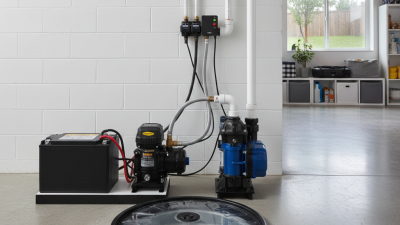
A battery sump pump is an emergency layer, not a complete waterproofing system. It protects the pit when electricity fails, often during storms.

The U.S. Energy Information Administration reported that American electricity customers experienced an average of about 5.5 interruption hours in 2023, including major events. That figure varies widely by region. A battery may cover several hours, but not every flood scenario.

Check performance at your actual discharge height. A pump rated at 2,000 gallons per hour may move far less water through a long, narrow pipe. Measure the vertical lift, pipe length, and expected inflow.

The battery size matters too. A 12-volt deep-cycle battery can provide useful reserve power, but runtime depends on cycling frequency, temperature, and battery age. It is not infinite.

This is where many buying decisions become too optimistic.

A dead battery ends protection. A frozen or blocked discharge line can defeat a powerful pump. Poor pit placement can also leave water outside the pump’s intake range.

The Federal Emergency Management Agency advises maintaining drainage systems and testing emergency equipment before severe weather. Test the pump monthly, inspect the float switch, and replace batteries according to measured capacity rather than appearance.

Add an audible alarm if possible. Still, even a well-tested backup cannot replace grading, sealed walls, or a properly sized primary pump.

Rescue equipment should be treated as temporary protection, not permission to ignore the basement’s underlying water problem.

Assess Your Basement’s Water Risk and Pumping Requirements

How to Choose a Battery Sump Pump?

Assess your basement’s water risk before comparing pump features. Check the pit after heavy rain, not only on dry days. Look for a rising water line, damp masonry, or a pump that runs repeatedly. A basement below the water table needs more protection. So does a home near a river, steep slope, or poorly drained yard. One overlooked detail is the discharge pipe. A narrow or frozen pipe can defeat a powerful pump.

Measure the pit depth and record the pump’s vertical lift to the outdoor outlet. Then estimate the required flow at that height. Published flow rates can look impressive, but they often apply to low lift. Ask for performance data at your actual discharge height. Choose a battery pump with a tested backup duration, automatic activation, and a clear alarm. A sealed battery reduces maintenance, while a replaceable battery may lower long-term costs. Check the charger, wiring, and ventilation requirements carefully.

I once saw a homeowner focus on battery size and ignore pump cycling. That choice shortened backup time during a storm. Count how often the primary pump starts during wet weather. Consider a second backup pump if the pit fills quickly. Test the system every few months by raising the float switch. Batteries age, even when unused. Local flooding patterns and electrical conditions also matter, so a licensed plumbing professional should verify the installation. Even careful estimates can be wrong. Recheck them after the next major storm.

How to Choose a Battery Sump Pump? - Assess Your Basement’s Water Risk and Pumping Requirements

Basement Water-Risk Factor Typical Site Condition Estimated Risk Level Recommended Battery Backup Capacity Recommended Pumping Approach
Low groundwater and limited rainfall Dry climate, well-drained soil, no history of basement flooding Low 12–24 hours of intermittent operation A compact backup pump may be sufficient if the primary pump and check valve are properly maintained.
Seasonal heavy rain Occasional storms, moderate soil drainage, sump pit fills several times per day Moderate 24–48 hours of intermittent operation Choose a backup system with an independent float switch, a sealed deep-cycle battery, and an alarm.
High water table Sump pit receives water regularly, including during dry weather High 36–72 hours of intermittent operation Use a higher-capacity battery, continuous charging, and a backup pump rated for frequent cycling.
Flood-prone location Basement has flooded before or the property is near a stream, lowland, or stormwater route Very High 48–72+ hours, subject to site testing Consider two independent pumps, a larger battery bank, a high-water alarm, and an emergency power source.
Frequent power outages Utility interruptions commonly last several hours or occur during storms High At least 24–48 hours for the expected outage duration Prioritize battery capacity, charger reliability, audible alarms, and a clearly visible status indicator.

Pump and Battery Sizing Guide

Measurement or Requirement How to Assess It Common Planning Range Selection Implication
Required flow rate Measure how quickly the sump pit refills or estimate inflow during heavy rain. About 1,000–2,500 gallons per hour for many residential situations Select the pump using its flow at the actual discharge height, not its zero-lift rating.
Total dynamic head Add the vertical lift from the pump to the outlet and account for pipe length, elbows, and check valves. Often 6–12 feet in residential installations Use the manufacturer’s performance curve to confirm delivered flow at the calculated head.
Discharge pipe size Check the existing discharge line and the pump outlet connection. Common residential sizes are 1.25–2 inches Avoid unnecessarily narrow piping because it increases friction and reduces flow.
Battery voltage Match the battery to the pump control unit and charger specifications. Common systems use 12 or 24 volts Do not substitute a battery with a different voltage or incompatible chemistry.
Battery energy capacity Multiply battery voltage by amp-hour capacity, then allow for usable-capacity limits and conversion losses. Approximately 1,000–2,000 watt-hours for extended backup planning Higher capacity increases runtime, but charging time, ventilation, and installation space must also be considered.
Expected pump duty cycle Record how often and how long the pump runs during a representative wet period. Intermittent cycling is typical; continuous operation requires site-specific design A pump that runs continuously may indicate excessive inflow, a blocked discharge, or an undersized system.
Alarm and monitoring Check whether the system can warn about high water, low battery, pump failure, or charger faults. Audible alarm plus visual status indication Choose a system that remains noticeable during storms and can be tested without removing the pump.

Planning note: Actual pump performance and battery runtime vary with water inflow, discharge height, pipe configuration, battery condition, temperature, and pump cycling. Confirm final sizing with on-site measurements and the pump performance specifications.

Compare Battery Types, Pump Capacity, and Backup Runtime

Choosing a battery sump pump starts with battery chemistry, not advertised horsepower. Sealed lead-acid batteries are usually cheaper and widely available. However, they are heavy and lose capacity faster in heat or deep discharge. Lithium iron phosphate batteries cost more upfront. They generally offer longer cycle life and steadier voltage. The International Energy Agency’s Global EV Outlook 2024 identifies LFP chemistry as a lower-cost, durable lithium option, although sump-pump testing is different. That distinction matters.

Capacity must match the basement’s water risk. A pump rated at 2,000 gallons per hour may deliver far less through a tall discharge pipe or narrow fittings. The Hydraulic Institute stresses that pump performance depends on total dynamic head, not flow rating alone. Measure the vertical lift, pipe length, and elbows before comparing models. Bigger is not automatically better.

Runtime requires honest arithmetic. A 12-volt, 100-amp-hour battery stores about 1,200 watt-hours theoretically. A 400-watt pump could run roughly 2.5 hours after allowing 15% conversion loss. That estimate is imperfect. Lead-acid capacity can fall under heavy loads, a behavior described by the Peukert effect in Battery University’s BU-201 technical review. DOE’s Energy Storage Grand Challenge Roadmap places lithium-ion round-trip efficiency near 85–95%, but real backup systems also consume inverter power. Check the pump’s running watts, starting surge, float-charger limits, and expected cycling. During a storm, a pump may run repeatedly rather than continuously. Test the system with a full pit and a simulated power outage.

Evaluate Installation, Alarm Systems, and Maintenance Needs

Choosing a battery sump pump starts with the installation conditions, not the advertised capacity. Measure the pit depth, discharge-pipe diameter, and vertical lift to the outlet. A pump must fit without blocking the primary float or check valve. Confirm that the battery box has ventilation and stays above possible floodwater. Some basements have narrow pits, awkward pipes, or weak outlets. These details can change the right choice.

Alarm systems deserve close attention. Select a unit with a loud local alarm for high water, battery failure, and power loss. A visible indicator helps during daytime inspections. Remote alerts can be useful, but they should not replace an audible warning. Test every alarm by raising the float or disconnecting power briefly. A warning that nobody hears is not reliable. Consider whether household noise could hide it.

Maintenance is easier when the design allows quick access to the pump, float, charger, and battery terminals. Inspect the system monthly, especially before heavy-rain seasons. Remove dirt from the pit and check for tangled cords or restricted discharge lines. Test backup operation under realistic conditions. A battery may appear charged yet fail under load. Replacement timing depends on battery type, temperature, and usage, so follow the manufacturer’s specifications rather than guessing. Keep a dated test record. It may feel excessive, but forgotten equipment often fails when attention is elsewhere.

How to Choose a Battery Sump Pump?

Evaluate the pump’s output at the required discharge height, then confirm installation requirements, alarm coverage, and battery maintenance needs.

The chart shows a representative battery-backup pump performance profile as discharge head increases. Select a pump that still provides adequate flow at your actual vertical lift. Before installation, verify the discharge route, check valve, power connection, and battery enclosure. Choose an alarm with audible and visual alerts, and inspect the battery, terminals, float switch, and alarm operation at least every three to six months or according to the manufacturer’s instructions.

Select a Reliable Model Based on Safety, Cost, and Compatibility

Choosing a battery sump pump starts with safety, not advertised flow rate. FEMA reports that one inch of floodwater can cause about $25,000 in home damage. That figure makes backup protection worth serious evaluation. Select a model with overload protection, a sealed battery enclosure, and a tested alarm. Keep the battery away from standing water. Follow local electrical codes and the installation manual carefully.

Cost needs a wider calculation. The purchase price is only one part. Include battery replacement, testing, electricity, and possible discharge-pipe modifications. The U.S. Energy Information Administration reported an average residential electricity price of 16.0 cents per kilowatt-hour in 2023. A low-power charger may cost little to operate, but an undersized pump can create expensive failure risks. Cheap is not always economical.

Compatibility is often overlooked. Measure the pit diameter and water depth before ordering. Check the pump’s discharge size, required check valve, battery type, and expected runtime. The U.S. Department of Energy advises considering equipment efficiency and operating conditions, not just upfront price. Test the system during a simulated outage. Watch the float switch move freely. A backup pump that cannot fit the pit is useless. I would also record monthly battery voltage, although that habit may be excessive for some homes. Manufacturers sometimes publish optimistic runtime figures; actual results change with pump head, pipe length, battery age, and storm frequency.